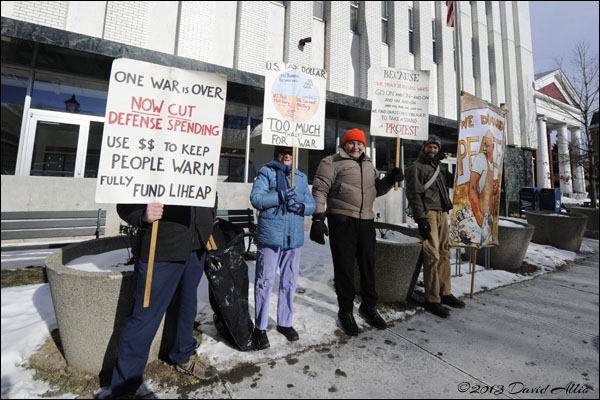
War Protesters | ©2013 David Allio
Peaceful protesters gather near the state capitol building in Montpelier, Vermont, every Friday from noon until 1pm to express their discontent with the ongoing foreign war commitments and expenditures by the United States. Even in below-freezing weather, a committed group stands on the sidewalk in front of the U.S. Postal Service office with hand-made placards and publicly question the current allocation of tax funds and wonder where the peace dividend disappeared at the end of one Middle East war. These protesters bring extra signs, just in case visitors care to join in their weekly demonstration for peace.
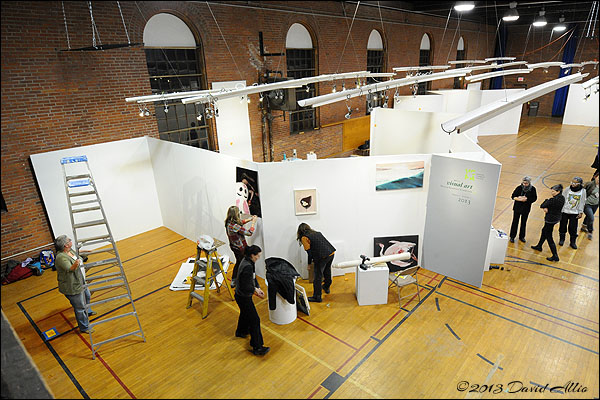
Installation Night | © 2013 David Allio
Friday night was a defining moment in the lives of students entering their first semester of graduate school in search of a Master of Fine Arts degree in Visual Arts. In a matter of three hours, all of their worries, hopes, and dreams were on display in Alumni Hall on the campus of the Vermont College of Fine Arts. Blank white wall-space faced these veteran of the art world as they submitted their accomplishments as beginners at this level of the educational process for review by their peers, their instructors, and the public. With installation complete, there are now 16 more of us who may rightfully say, "We Are VCFA!"
According to Webster’s Online Dictionary, synonyms for “authentic” include: genuine, true, real, original, veritable, unaffected, unadulterated, unalloyed, unmixed, or natural.
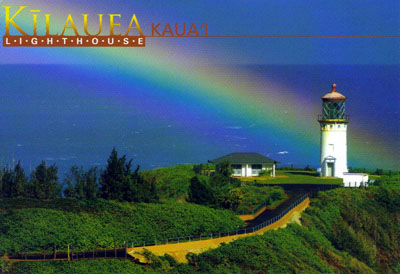
Kilauea Lighthouse | ©2007 David Allio for Island Heritage
So, just how important is authenticity to photography?
In the 19th Century, photography was discredited as an art form because it was too real – too authentic. In the era of digital imaging, the question of authenticity is credible and vital regarding photography as an accurate historical tool. But as the visual arts meld in the digital arena, is authenticity important?
Professional digital cameras now have an “Authenticity Key” or code that is embedded in each original image. If authenticity were not significant, there would not be a need for that digital code to identify an original image. If authenticity were not important, news services would not have detailed documents dedicated to compelling accuracy in reportage photography. If authenticity were not the foundation of historical photography, then why did the photography world issue a collective gasp when the New York Times published notes from a 1950s interview with news photographer W. Eugene Smith in which he said, “I didn’t write the rules. Why should I follow them? I don’t object to staging, if and only if I feel that it is an intensification of something that is absolutely authentic.”
That statement brings into question the authenticity of some of his most famous photographs. Some of his most iconic photographs: “Dewey Defeats Truman”, “Tomoko Uemura in Her Bath”, and “A Walk to the Paradise Garden” – were they staged or enhanced? Were they authentic?
Artists have attempted “Photorealism”, a painstaking, time-consuming, detailed reproduction of a scene. Within the past couple of centuries, art has also gone through a variety of other genre including, but not limited to: Minimalism, Surrealism, Modernism, and Conceptual Art. Most of these artistic styles were devised as a way of systematically segregating art and photography.
In the digital era, art and photography are merging, as exemplified by the November 2011 sale of the highest priced, to date, photograph ever sold. German visual artist Andreas Gursky created a photographic image in 1999 that, following the original sale and several re-sales, brought over $4.3-million at auction. The piece of visual art entitled “Rhein II” is 73×143 inches in size and similar in style to a Minimalist artwork. The artist also admitted that the original photograph had been digitally manipulated.
“This view cannot be obtained in situ,” he said. “A fictitious construction was required to provide an accurate image of a modern river.”
The question now becomes: Can a digitally enhanced photograph still be considered a photograph? How can a “fictitious construction” be considered an “accurate image”?
So, just how important is authenticity to photography?
The illustration accompanying this text is one example of a published reproduction by Island Heritage of Hawaii. This photograph has also appeared in calendars by the same publisher. Reproductions of post cards and calendars are available from the publisher. For the record, the rainbow in the photograph is authentic. For a brief period of time it was a part of this magical scene. It was not, as some have suggested, added during digital post processing. To learn more about the technical requirements for photography of an authentic rainbow, workshops are available.


You must be logged in to post a comment.